About Us
Chronological History of the National Institute of Cancer Research & Hospital (NICRH)
Early Foundations of Cancer Care (1982–1990)
The journey of organized cancer care in Bangladesh began in 1982 at Dhaka Medical College Hospital. During this period, cancer treatment services were limited and operated through small, project-based initiatives. Despite modest beginnings, this marked the country’s first structured step toward addressing cancer as a public health priority.
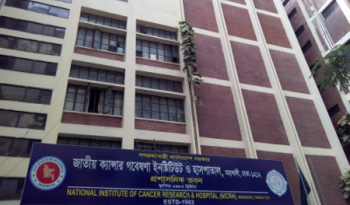
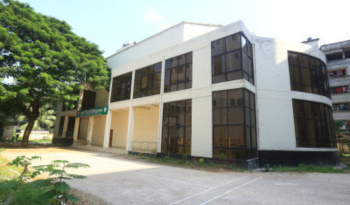
A significant milestone was achieved in 1986 when cancer services were relocated to a dedicated building in Mohakhali, generously provided by the Rotary Club of Dhaka. This shift allowed the services to function as a specialized center for cancer detection and treatment, laying the groundwork for institutional development.
Between 1989 and 1990, the Government of Bangladesh formally approved plans to establish a national cancer institute. Sanctioned posts were created, and comprehensive development planning for a permanent cancer hospital was initiated, signaling strong state commitment.
Establishment as a Dedicated Cancer Hospital (1991–1994)
In 1991, the institute commenced full clinical operations in its newly constructed hospital building at Mohakhali. With an initial capacity of 50 inpatient beds, it officially began functioning as a cancer hospital.
Recognizing the growing demand for cancer services, the government decided in 1993 to expand the hospital to 300 beds in a phased manner. In 1994, the institution was formally renamed the National Institute of Cancer Research & Hospital (NICRH), reflecting its dual mandate of clinical care and research.
Introduction of Modern Cancer Treatment (1995–1999)
A landmark advancement occurred in 1995 when NICRH delivered its first radiotherapy treatment using a Cobalt-60 teletherapy machine. In the same year, the hospital was transferred from the development budget to the revenue budget, ensuring sustainable operational funding.
In 1996, brachytherapy services were introduced with the installation of a Cesium-137 machine. Throughout this period, both outpatient and inpatient services expanded steadily, enhancing access to modern cancer treatment.
Infrastructure Expansion and Academic Growth (2000–2005)
In 2002, the foundation stone of a new 300-bed hospital building was laid at Mohakhali. The following year, the government approved the first phase of bed expansion—from 50 to 150 beds—with partial financial support from the Saudi Fund for Development (SFD).
A major academic milestone was reached in 2004 with the introduction of postgraduate education. MD and MS programs were launched in Radiation Oncology, Medical Oncology, and Surgical Oncology, establishing NICRH as a center for specialized medical training.
In 2005, NICRH initiated the country’s first hospital-based cancer registry, a groundbreaking achievement that significantly strengthened cancer research and national public health planning.
Adoption of Advanced Technology (2006–2009)
The cancer registry program gained formal recognition in 2006 and was further expanded. In 2008, NICRH introduced Bangladesh’s first Linear Accelerator (LINAC) along with a Treatment Planning System, marking a new era in precision radiotherapy.
By 2009, the hospital was officially upgraded to 150 beds. Blood bank and emergency services were introduced, new oncology manpower positions were created, and LINAC services began clinical use on a trial basis.
Strengthening Clinical Services (2010–2014)
To support critically ill patients, ICU services were introduced in 2013. In the same year, telemedicine services were launched, extending cancer care access beyond Dhaka.
In 2014, a fourth modern linear accelerator was commissioned, substantially increasing the hospital’s radiotherapy capacity and treatment efficiency.
Transformation into a Comprehensive Cancer Hospital (2015–2018)
In 2015, NICRH reached a major milestone by becoming a full 300-bed hospital. Advanced facilities such as a CT simulator and colposcopy services were introduced. Chemotherapy mixing safety cabinets and cabin blocks were established, and free breast cancer screening programs for women were initiated.
A large-scale expansion of the nursing workforce took place in 2016. In 2017, a physical corridor was constructed to connect the hospital and administrative buildings, and two new operation theaters were added, strengthening surgical oncology services.
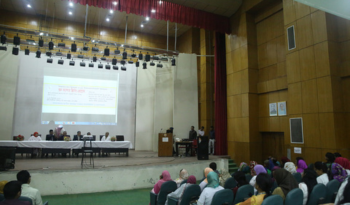
In 2018, a modern 300-seat auditorium was inaugurated. Patient queue management systems, counseling services, cancer awareness displays, administrative building expansion, and installation of new CT scanner and MRI machines were completed, greatly enhancing patient care and institutional capacity.
Digitalization and Research Expansion (2019–2021)
In 2019, NICRH launched its official government website, and the government announced plans to upgrade the hospital to 500 beds.
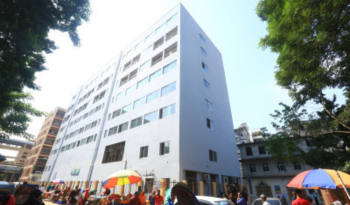
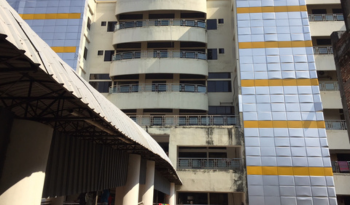
Despite the challenges of the COVID-19 pandemic, significant progress continued. In 2020, the multi-storied D-Block was completed, and several departments—including hematology, pediatric oncology, radiology, dental oncology, and maxillofacial oncology—were relocated to larger facilities. Large electronic display systems were installed for public awareness, and the Cancer Journal of Bangladesh began publication with ISSN registration.
In 2021, NICRH introduced RT-PCR laboratory services for COVID-19 testing and officially began functioning as a 500-bed hospital. An organ-based surgical oncology unit was established, and vertical expansion of the administrative building was completed.
Recent Progress and Future Vision (2022–2026)
In 2023, the first phase of hospital automation and digital hospital systems was initiated. In 2024, NICRH published its first institutional yearbook, documenting activities from 2023.
Looking ahead, NICRH plans to launch a new independent hospital platform along with an upgraded website in 2026, aiming to further enhance digital health services and patient engagement.
Present Status
Today, NICRH stands as the largest public comprehensive cancer center in Bangladesh. It provides advanced radiotherapy, chemotherapy, immunotherapy, hormone therapy, specialized surgical oncology (including pediatric and organ-based care), ICU and diagnostic services, cancer screening, academic training, research publications, and a nationally significant hospital-based cancer registry.
Objectives
To provide quality cancer treatment
To make a centre of excellence in the country
To carry out research and disseminate the knowledge and findings
To establish a nationwide cancer registry system
To take necessary steps for cancer prevention and control
Activities
All diagnostic activities- for cancer detection
All kinds of treatments- surgery, radiotherapy, chemotherapy, etc.
Hospital-Based Cancer Registry
It has formulated National Guidelines for high-quality, cost-effective cancer treatment plans for 4 common cancers in our country.
Different training programs- for health professionals –histopathologists, gynecologists, nurses, technologists, community leaders, etc.
Organizing tobacco prevention & cessation programs in the community.
Participation in national activities- such as observance of World Cancer Day, World Pediatric Cancer Day, No Tobacco Day, Breast & Cervical cancer awareness month, and chalking out of special Breast Cancer Screening Campaign in the victory month of December from 2015.
Telemedicine services
Publication of NICRH journal
Palliative care services
Academic activities